

Resources — Films & Presentations
Media Catalog
Partner with our mission →
Every question, answered.

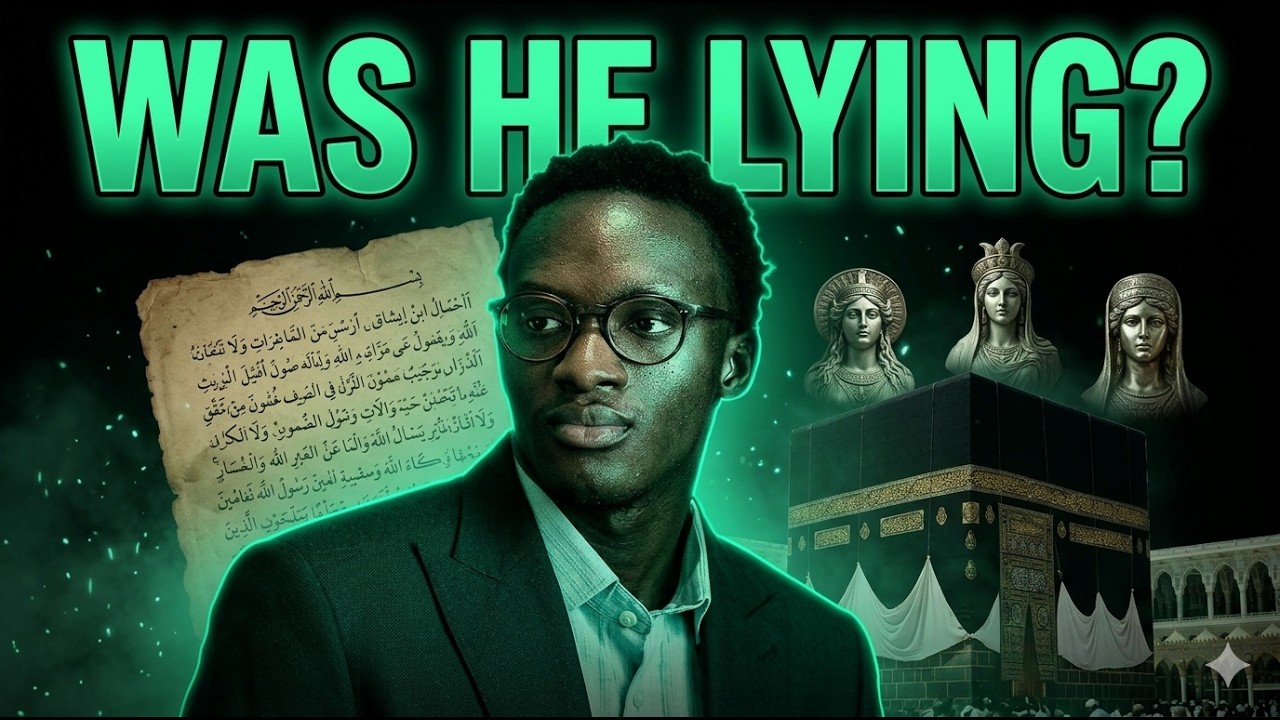


Presentation · 13 pages
Has the Bible been changed?
Read the deck →
Presentation · 20 pages
Was Jesus real, or a myth?
Read the deck →
Presentation · 20 pages
Did Jesus really die?
Read the deck →
Presentation · 23 pages
Was Jesus raised from the dead?
Read the deck →
Presentation · 22 pages
Was Jesus foretold?
Read the deck →
Presentation · 16 pages
Who wrote the Gospels?
Read the deck →
Presentation · 15 pages
Do the Gospels contradict each other?
Read the deck →
Presentation · 20 pages
Are the Gospels eyewitness accounts?
Read the deck →
The Bible Experience • Vol I
Barriers to Bible Interpretation — Language
Read Vol I →
The Bible Experience • Vol II
Barriers to Bible Interpretation — Culture
Read Vol II →
The Bible Experience • Vol III
Barriers to Bible Interpretation — Context
Read Vol III →
The Bible Experience • Vol IV
Inspiration of the Bible
Read Vol IV →
The Bible Experience • Vol V
Hermeneutics — The Science of Bible Interpretation
Read Vol V →
Presentation · 20 pages
Is Jesus of Nazareth God?
Read the deck →
Presentation · 20 pages
The Cross and the Crown: The God-Man Part 1
Read the deck →
Presentation · 20 pages
The Cross and the Crown: The God-Man Part 2
Read the deck →
Presentation · 22 pages
How to Defend Your Faith Part 1
Read the deck →
Presentation · 22 pages
How to Defend Your Faith Part 2
Read the deck →
Presentation · 30 pages
Catechism: How is a man saved?
Read the deck →
Presentation · 22 pages
Catechism: How is a man saved? Part 2
Read the deck →
Answering Islam · The Bible
Has the Bible been changed?
Swipe →
Muslims say the Bible was corrupted. Rewritten by human hands. No longer what God gave.
And that the Qur’an, unlike your book, was kept perfect.
It’s a fair challenge. It also falls apart fast.
Start with the Qur’an itself. It tells Christians to judge by the Gospel.
“And let the People of the Gospel judge by what Allah has revealed therein.”
That is Muhammad’s own book. Speaking to Christians in his own lifetime. About the Gospel they were holding.
Qur’an 5:47
It says the same to Jews and Christians together.
“You are standing on nothing until you uphold the Torah, the Gospel, and what has been revealed to you from your Lord.”
Uphold them. Obey them. This is the Qur’an calling the Torah and Gospel God’s word. Not lost. Not corrupt.
Qur’an 5:68
The problem that creates.
If the Gospel was already corrupted, why send anyone to it? You don’t tell people to obey a book you say is broken.
So either the Gospel was trustworthy in the 600s, or the Qur’an pointed people to a lie. It cannot be both.
The Qur’an even tells the doubter where to check.
“So if you are in doubt about that which We have revealed to you, then ask those who have been reading the Scripture before you.”
Ask the people reading the earlier Scripture. The very book now said to be corrupt.
Qur’an 10:94
Now the evidence they rarely mention.
In 1947, a shepherd found jars of scrolls in a cave above the Dead Sea. Inside was a complete copy of Isaiah.
Written around 125 BC. Seven hundred years before Islam. Before Jesus was even born.
Scholars set it beside the Hebrew Bible we read today. A thousand years of copying stood between them.
About 95 percent identical. The differences were mostly spelling and the odd slip of the pen.
Nothing that touched the meaning. The text had held.
The New Testament is the best preserved book of the ancient world. It is not close.
More than 5,800 Greek copies survive. Some written within a couple of centuries of the events. Older than Islam itself.
No other ancient book has a fraction of that.
Are there differences between the copies? Yes. Spelling. Word order. A tired scribe’s mistake.
We can see every one of them, precisely because we have so many copies to compare.
Not a single Christian teaching rests on a disputed line.
So when was it corrupted?
Not after Muhammad. The copies already existed, centuries before him, saying what ours say.
To prove the Bible was changed, you would have to produce the real one it replaced. In fourteen hundred years, nobody has. It was never written.
And picture the scale.
By Muhammad’s day the Gospel was everywhere. In Greek, Latin, Syriac, Coptic. Across Africa, Asia and Europe. Thousands of copies, in different lands, in different languages.
You cannot round them all up and edit them into agreement. It is not possible.
So it wasn't changed.
Which leaves the question that was always the real one.
Not whether the Bible is reliable. It is. Whether you will read what it says.
“The grass withers, the flower fades, but the word of our God stands forever.”
Isaiah 40:8
The Historical Jesus
Was Jesus real, or a myth?
Swipe →
Some say Jesus never walked the earth. That his followers invented him. A legend dressed up as a man.
It has a name. Mythicism. It is loud online.
It is also believed by no serious historian alive. Here is why.
Start with the most famous skeptic in the field. Bart Ehrman. An agnostic. The scholar your atheist friends quote.
He wrote an entire book to shut this claim down.
“He certainly existed, as virtually every competent scholar of antiquity, Christian or non-Christian, agrees.”
Bart Ehrman
That is not a lone opinion. It is the whole field.
There is more evidence for Jesus of Nazareth than for almost any other figure of the ancient world.
The handful who deny it are not doing history. They are doing ideology.
So set the New Testament aside for a moment.
Just read what his enemies wrote. Romans. Jews. Greeks. Syrians. None of them followers. Several of them hostile.
Every one of them treats him as a real man.
Tacitus was Rome’s greatest historian. He had no love for Christians. He called their faith a “mischievous superstition.” Around 116 AD, he still wrote this.
“Christus, from whom the name had its origin, suffered the extreme penalty during the reign of Tiberius at the hands of one of our procurators, Pontius Pilate.”
He names the man. The emperor. The governor. The place. A hostile witness with nothing to gain.
Tacitus, Annals 15.44
Josephus was a Jewish historian writing for Rome around 93 AD. Not a follower of Jesus. He mentions him twice.
“There was a wise man called Jesus. His conduct was good, and he was known to be virtuous. Many people became his disciples. Pilate condemned him to be crucified.”
Josephus, Antiquities 18.3.3
He mentions him again, in a line no scholar disputes.
“the brother of Jesus, who was called Christ, whose name was James.”
You do not record the brother of a man who never existed.
Josephus, Antiquities 20.9.1
Pliny was a Roman governor. Around 112 AD he wrote to the emperor, unsure what to do about the Christians filling his province.
“They met before dawn and sang a hymn to Christ, as to a god.”
Within eighty years of his death, they were already worshipping him. Long before any council decided anything.
Pliny the Younger, Letters 10.96
Suetonius wrote the lives of the emperors. He noted that around 49 AD, Jews were expelled from Rome for rioting over someone he calls “Chrestus.”
The New Testament records the very same expulsion. Two sources, one Christian, one not, landing on the same event.
Suetonius, Claudius 25.4 · Acts 18:2
A Syrian philosopher named Mara bar Serapion, writing to his son, asked what the Jews gained by “executing their wise king.”
And the Jewish Talmud, no friend of Jesus, still admits it. It says he was executed on the eve of Passover for “sorcery.” Their own way of conceding he did things they could not explain.
Babylonian Talmud, Sanhedrin 43a
Even Lucian, a Greek satirist who mocked Christians as gullible, granted the basic facts.
“They worship a man to this day, the one who introduced their novel rites, and was crucified on that account.”
Celsus, another hostile Greek critic, tried to explain Jesus’ miracles away as magic. He never once said Jesus did not exist.
Lucian, The Death of Peregrinus
Add it up. Without opening a Bible, from writers who wanted the movement gone, we already know this.
Jesus was a real man. A teacher in first-century Judea. With a large following. Credited with wonders his enemies called sorcery. He had a brother named James. He was executed under Pontius Pilate. His followers worshipped him within decades.
That is more independent testimony than we have for most of the ancient world.
Now add the New Testament back. Not as scripture. As evidence.
It is not one book. It is 27 documents, written by many hands, in three languages, within decades of the events.
No historian throws out a source simply for being religious.
Paul’s letters are the earliest we have. Fifteen to thirty years after the cross.
And Paul says he met them in person. Peter. John. And James, the brother of Jesus.
You do not sit down to eat with the brother of a legend.
Galatians 1:19
The four Gospels were written within a single generation. Mark within about 35 years of the events.
There was no gap of centuries for a legend to grow in the dark. The people who knew Jesus were still alive to correct the record.
And they read like testimony, not folklore. Real people are named. Bartimaeus. Simon of Cyrene. Joseph of Arimathea.
So are details no inventor would keep. Peter denying he ever knew him. The disciples scattering in fear. Women as the first witnesses, in a world that would not accept a woman’s word in court.
Inventors tidy those away. Witnesses leave them in.
And the text was preserved better than any book of its age.
Over 5,800 Greek copies survive. Over 25,000 in every language. The earliest fragment sits within about fifty years of the original.
Homer’s Iliad, the next best preserved, has around 1,800 copies. The works of Tacitus survive in about twenty. By the standard used for every other ancient book, this one stands alone.
“But Christianity just copied older myths. Mithras. Horus. Osiris.”
Read the actual sources. Mithras was born from a rock, not a virgin. Horus was never crucified. None of them is a real, dated, eyewitness-claimed man of history.
That theory came from an internet documentary, not a library. Scholars retired it long ago.
So the myth falls apart at every point.
Jesus of Nazareth was a real man who walked the earth. That was never the honest question. The honest question is who he was.
“We did not follow cleverly invented stories when we told you about the coming of our Lord Jesus Christ. We were eyewitnesses of his majesty.”
2 Peter 1:16
The Historical Jesus
Did Jesus really die?
Swipe →
There are two ways people dodge the cross.
Maybe he did not really die. He only fainted, and revived later. Or maybe it was not even him up there, and someone else was killed in his place.
Either way, no death, no resurrection, no Christianity. So the question is not small.
“One of the most certain facts of history is that Jesus was crucified on orders of the Roman prefect of Judea, Pontius Pilate.”
That is Bart Ehrman, an agnostic. The atheist scholar Gerd Lüdemann goes just as far, calling the death by crucifixion “indisputable.”
Bart Ehrman
Historians rank his death among the most certain facts of the ancient world. More certain than events they accept without a second thought.
Four reasons carry that weight.
First, the sheer number of witnesses.
His death is recorded in all four Gospels, in the earliest creed within a few years, in Paul’s letters, in Acts, and in Hebrews. Then outside the church entirely: Tacitus, Josephus, the Talmud, Lucian, Mara bar Serapion.
Eight to ten independent sources for a single event. Almost nothing in ancient history is attested that well.
Second, the shame of it.
Crucifixion was the ugliest death Rome had. Reserved for slaves and rebels. If you were inventing a Messiah, the last thing you would invent is a crucified one.
The first Christians did not bury that fact. They preached it. You do not invent your own disgrace.
Third, the men who did it.
Rome crucified thousands. These were professional executioners. A soldier who let a condemned man down alive paid for it with his own life.
They did not make mistakes about death.
Jesus died faster than most. Hours, not days.
It was quick enough that Pilate himself was surprised to hear he was already dead. He summoned the centurion to confirm it before releasing the body.
Even the man who signed the order made sure.
Mark 15:44
The standard way to hasten death was to break the victim’s legs, so he could no longer push up to breathe.
When the soldiers reached Jesus, they saw he was already dead. So they left his legs unbroken.
The executioners themselves certified him gone.
John 19:33
To be certain, one of them drove a spear into his side.
“and at once blood and water came out.”
A fisherman, writing decades later for ordinary readers, recorded a medical detail he had no reason, and no way, to invent.
John 19:34
Modern medicine recognises what he described.
In 1986, pathologists in the Journal of the American Medical Association examined the crucifixion. Their finding was blunt.
“Jesus was dead when taken down from the cross.”
The flow of blood and water is exactly what a body already dead would produce. He was gone before the spear ever touched him.
JAMA, 1986
So he died. That much is history. Now the two ways people try to escape it.
The first is the swoon theory. The claim that Jesus never really died. He only passed out on the cross, and woke again in the cool of the tomb.
It was abandoned back in the 1800s. And not by Christians.
The skeptic David Strauss, no friend of the faith, buried this theory himself.
A man half-dead, whipped to the bone, pierced through, and sealed in a tomb for three days with no care, could not roll away a massive stone, overpower armed guards, and walk miles on pierced feet.
He would have looked like a man who needed a hospital. Not the risen Lord of life.
The second escape came six hundred years later.
The Qur’an says it only appeared that he was crucified.
“They did not kill him, nor did they crucify him, but it was made to appear so to them.”
Qur’an 4:157
There is not one ancient source behind this. Not one.
It appears six centuries after the event, in another land, written by someone who was not there.
The people who were there, his mother, the women, his disciples, watched him die up close. The idea that every one of them mistook another man for Jesus is impossible to believe.
Look who stood at that cross.
His mother, at the very foot of it. The women who had followed him from Galilee, watching nearby. His enemies, who wanted him dead and stayed to see it done.
Romans. Jews. Friends. Enemies. All of them agree on one fact. He died.
And he was buried.
Taken down, wrapped in linen, and laid in a known tomb belonging to Joseph of Arimathea, a member of the very council that had condemned him.
A named man. A known grave. There was no confusion about whether he had died.
So weigh it honestly.
Friends recorded his death. Enemies confirmed it. A Roman governor was surprised by how fast it came. Modern doctors verified it. Every escape theory was built on hope, not evidence.
By any standard we use for history, this one is settled.
Jesus of Nazareth was crucified under Pontius Pilate, and he died.
A dead man. Certified by the very soldiers paid to kill him. Sealed in a borrowed grave.
That is not the end of the story. That is where it begins.
It was real. It was finished. It was witnessed.
“When Jesus had received the drink, he said, ‘It is finished.’ With that, he bowed his head and gave up his spirit.”
John 19:30
The Historical Jesus
Was Jesus raised from the dead?
Swipe →
Every other question so far has been leading here.
Christianity does not simply include the resurrection. It stands or falls on it. Paul said so himself.
“If Christ has not been raised, our preaching is useless, and so is your faith.”
1 Corinthians 15:14
Most people assume the resurrection is off limits to history. A matter of faith, not evidence. It is not.
The scholar Gary Habermas spent decades reading thousands of academic works on the subject. He found a short list of facts that nearly every critical scholar accepts. Atheist, agnostic, Jewish, Christian.
Then he asked the only question that matters. What explains all of them at once?
Fact one. Jesus died by crucifixion.
We have already seen it. Friends recorded it, enemies confirmed it, doctors verified it. On this, there is no serious debate.
So the man was truly dead. Start there.
Fact two, and the strongest of all. His disciples were certain they had seen him alive again.
This is not one late report. It runs through the earliest creed, all four Gospels, the sermons in Acts, and the rest of their lives.
Whatever happened, they were sure they had seen him.
“We can say with complete certainty that some of his disciples insisted that he soon appeared to them, convincing them that he had been raised from the dead.”
That is Bart Ehrman, an agnostic. The scholar E.P. Sanders agrees. That the followers had resurrection experiences is, in his words, "a fact."
Bart Ehrman • E.P. Sanders
Now feel the weight of it.
These were not people repeating a rumour. They claimed to see him with their own eyes. And almost every one of them, by the earliest accounts we have, was killed rather than take it back.
People will die for what they believe is true. Nobody dies for what they know is a lie.
Fact three. Paul.
He was not a follower. He was hunting Christians down, dragging them to prison. Then on the road to Damascus, he said he met the risen Jesus.
He spent the rest of his life beaten, stoned, shipwrecked, and finally executed for it. He had everything to lose and nothing to gain.
Fact four. James, the brother of Jesus.
During Jesus’ life, his own brothers did not believe in him. Then, after the cross, James becomes a leader of the church in Jerusalem, and dies a martyr for it.
The earliest creed says simply, “he appeared to James.” Something turned a skeptical brother into a man who would die for him.
Fact five. The tomb was empty.
This is the most debated of the five, yet still granted by around three quarters of scholars.
And the detail that seals it. Everyone knew where the tomb was. To end the movement overnight, the authorities only had to produce the body. They never did.
Look at how his enemies answered.
The earliest counter-story, recorded in Matthew, was not “the tomb is full.” It was “his disciples came and stole the body.”
Even the opposition conceded the tomb was empty. They only argued about how.
In that world, a woman’s testimony was not accepted in court. If you were inventing a resurrection story, you would never make women your first witnesses. You would never put Peter and John there, to make it stand up.
Instead, all four Gospels say women found the tomb, and Mary Magdalene saw him first. The only reason to write it that way is that it is what happened.
And none of this grew slowly over centuries.
Paul hands on a creed he says he “received” and “passed on.”
“that Christ died for our sins, that he was buried, that he was raised on the third day, and that he appeared to... living witnesses.”
Scholars date it to within a few years of the cross. Some, within months. It names living witnesses, and all but says: go and ask them.
1 Corinthians 15:3-5
So here are the five, agreed by friend and skeptic alike.
He died. His disciples were sure they saw him. Paul was sure. James was sure. The tomb was empty.
Now the honest test. Can any ordinary explanation carry all five? Watch them fall, one by one.
Maybe they hallucinated.
But hallucinations are private. They do not happen to groups. The creed lists Peter, then the Twelve, then five hundred at once, then James, then all the apostles.
Group hallucinations are unknown to psychology. And a hallucination cannot empty a tomb.
Maybe the disciples stole the body.
Then they died, one after another, under torture, for something they knew was a fraud.
People do not do that. Their willingness to die is proof they truly believed it.
Maybe the women went to the wrong tomb.
Then the authorities walk to the right one and produce the body. The rumour dies that afternoon.
They had every reason to. They never did.
Maybe it was a legend that grew with time.
But the creed is within a few years of the events. There was no time for legend to form.
The resurrection was the message from the very first day, not a later addition.
So line them up.
He died. His disciples were sure they saw him. An enemy, Paul, was sure. A skeptic, James, was sure. The tomb was empty.
Every natural theory explains one or two of these, and breaks on the rest. Only one explanation accounts for all five at once. He rose.
This is not wishful thinking. It is where the evidence leads even careful historians.
“The historian, of whatever persuasion, has no option but to affirm both the empty tomb and the meetings with Jesus as historical events.”
N.T. Wright spent a thousand pages weighing it. His conclusion: the best explanation is that Jesus was bodily alive again.
N.T. Wright
But not on the evidence. You would be saying no because your worldview rules out miracles before you begin. That is a philosophical choice, not a historical one.
The history is serious, and it points one way.
And if it happened, everything changes.
A man who beat the grave is not one teacher among many. Everything he said about himself is true.
This is not a story to admire from a distance. It is a fact to reckon with.
The tomb was empty. The witnesses were sure. The grave lost.
“He is not here. He has risen, just as he said.”
Luke 24:6
Messianic Prophecy
Was Jesus foretold?
Swipe →
Christians say the Old Testament predicted Jesus. Skeptics have two comebacks.
Either the prophecies were written after the fact. Or Jesus simply staged his life to match them.
Both have answers. And the evidence is older than you think.
It only matters if the prophecies came first. So start there.
In 1947, a shepherd found the Dead Sea Scrolls in a cave near the Dead Sea. Among them was a complete scroll of Isaiah, dated to about 125 BC.
Over a hundred years before Jesus was born. Every messianic line in it was already ancient when he arrived.
And these texts were not kept by Christians.
They were copied and guarded for centuries by Jewish scribes, who did not accept Jesus as Messiah.
Nobody slipped these predictions in later. They were there all along, held by the very people with every reason to remove them.
So the prophecies are old, and untouched. Now hear what they say.
They named the town. Seven hundred years before, Micah pointed to one small village.
“But you, Bethlehem, though you are small among the clans of Judah, out of you will come one who will be ruler over Israel.”
Micah 5:2
Isaiah gave the sign of his birth.
“The virgin will conceive and give birth to a son, and will call him Immanuel.”
Immanuel means God with us. Written seven centuries early.
Isaiah 7:14
Zechariah described how the king would enter his city. Not on a war horse. Humble, on a donkey.
“See, your king comes to you, righteous and victorious, lowly and riding on a donkey.”
Days before he died, Jesus rode into Jerusalem exactly so.
Zechariah 9:9
Zechariah even named the price of the betrayal.
Thirty pieces of silver, thrown to the potter in the house of the Lord.
Jesus was betrayed for thirty pieces of silver. The coins were thrown down in the temple, and used to buy a potter’s field.
Zechariah 11:12-13
But the deepest prophecy is Isaiah 53. Written 700 years before the cross.
For years, skeptics claimed Christians had edited it in later, to make Jesus fit.
Then the 125 BC scroll was found, with Isaiah 53 already in it, untouched. That argument was over.
Read what it says.
“He was despised and rejected by men, a man of suffering. He was pierced for our transgressions, he was crushed for our iniquities.”
A suffering, rejected, pierced servant. Centuries before Rome nailed a single man to a cross.
Isaiah 53:3, 5
It kept going.
“He was oppressed and afflicted, yet he did not open his mouth. He was assigned a grave with the wicked, and with the rich in his death.”
Jesus stood silent before his accusers. He was crucified between criminals, and buried in a rich man’s tomb.
Isaiah 53:7, 9
Now the most startling one. Psalm 22, written by David around 1000 BC.
It describes an execution in detail, centuries before crucifixion was even invented.
“They pierce my hands and my feet. They divide my clothes among them and cast lots for my garment. All who see me mock me.”
Pierced hands and feet. Soldiers gambling for his clothing. A watching crowd that mocked. Every line happened at the cross.
Psalm 22:7, 16, 18
Skeptics once argued the word was “pierced” only in Christian copies. A Dead Sea Psalms scroll settled it. The reading “pierced my hands and my feet” was there before Christ.
And another line: “not one of his bones will be broken.”
The soldiers broke the legs of the two men beside Jesus, to hasten death. When they reached him, he was already dead, so they left his bones unbroken.
Psalm 34:20
Then comes the boldest prophecy of them all. Daniel did not just say where, and how.
He said when.
Daniel wrote that from the decree to rebuild Jerusalem, there would be 483 years until the Messiah, and then he would be “cut off.” Killed.
The decree went out around 444 BC. Counting those years forward lands in the early first century, around AD 33. The very time Jesus was crucified.
Scholars debate the exact decree and the calendar used. But every reasonable method lands in the same window, within Jesus’ lifetime.
Daniel 9:25-26
And Daniel added a line that closes the door.
The Messiah would come and be cut off before the city and the temple were destroyed.
The temple fell in AD 70. So the Messiah had to have already come. Any claimant after that is simply too late. The window was open for one generation, and Jesus stepped into it.
One mathematician, Peter Stoner, tried to put a number on all this.
Take just eight of these prophecies. He estimated the odds of one man fulfilling all eight by chance at one in ten to the seventeenth power.
These are estimates, not exact science. But even generously, the improbability is hard to wave away.
To feel that number, Stoner painted a picture.
Cover the whole state of Texas two feet deep in silver dollars. Mark one single coin, and bury it somewhere in the pile. Blindfold a man, and send him to pick the right one on his first try.
That is the chance. And Jesus fulfilled far more than eight.
So return to the skeptic.
Written after the fact? The scrolls are older than Jesus, kept by his opponents.
Staged by Jesus? You cannot arrange your own birthplace, your ancestral line, a betrayal price set centuries before, a timeline fixed in Daniel, or the details of an execution not yet invented. Some things are beyond staging.
This is what design looks like.
One story, told across a thousand years, by dozens of writers who never met, all pointing to one man.
Then the man arrived. On time. In the right town. And died exactly as it was written.
You can still call it coincidence.
But at some point, coincidence becomes the harder thing to believe.
Written for centuries. Fulfilled in one life.
“Everything must be fulfilled that is written about me in the Law of Moses, the Prophets and the Psalms.”
Luke 24:44
The Gospels
Who wrote the Gospels?
Swipe →
Skeptics like to say the Gospels are anonymous, written centuries later by unknown hands. So you cannot trust them.
Both halves are false. Start with the timing.
Mark was written within about 35 years of the cross. Matthew within 50. Luke within 55.
All of them within the lifetime of people who were there. Some of them by eyewitnesses themselves.
To feel how close that is, compare it to anyone else.
The main biographies of Alexander the Great were written about 400 years after he died. Nobody doubts Alexander existed.
The Gospels stand eight to ten times closer to their subject than that.
“But they are anonymous. The authors never sign them.”
True. So did most ancient biographies. What matters is who the ancient world said wrote them. And on that, there is no argument at all.
Papias around AD 125. Irenaeus around 180. The Muratorian list. Origen, Tertullian, Clement.
Every early source, in every region, names the same authors. There is no rival tradition. Nobody in the ancient world ever proposed anyone else.
And here is the giveaway.
If the church wanted to invent authority, it would have chosen famous names. Peter. James. Andrew.
Instead it named a tax collector, an assistant of Peter, and a Gentile doctor. Forgers pick big names. Truth-tellers report who actually wrote it.
“Mark, the interpreter of Peter, wrote down accurately whatever he remembered of the things said and done by the Lord. He took special care not to omit anything, and not to state anything falsely.”
Papias, in Eusebius 3.39.15
And Mark reads exactly like that. Short, fast, vivid, full of an eyewitness’s small details.
He pauses to explain Jewish customs his Roman readers would not know. He is writing down Peter’s memory. Mark is Peter’s voice, put on paper.
Then Matthew. A tax collector, called by Jesus from his booth.
And a tax collector was the one man in that group trained to write, keep records, and take notes. If anyone was writing things down as they happened, it was him.
His Gospel proves the fit. Written for Jews. Packed with more Old Testament quotations than any other, over sixty of them. Tracing Jesus back to Abraham, the father of the Jewish people.
A Jewish hand, writing for a Jewish audience.
“Having had perfect understanding of all things from the very first, I write to you, that you might know the certainty of the things you have been taught.”
Luke 1:3-4
Luke also wrote Acts, where at times he says “we,” because he was there.
As Paul’s companion he could sit with Peter, with James, with Mary the mother of Jesus. He interviewed the witnesses. He checked his facts.
So look at what you actually have.
One Gospel from Peter’s own memory. One from an apostle trained to take notes. One from a historian who interviewed the survivors.
All three within a generation. All three named by everyone who came after.
These are not anonymous legends written centuries later.
They are the church’s first witnesses, writing down what they saw and heard, while the memory was still warm.
Not a rumour handed down. Testimony, written by the people who were there.
“That which was from the beginning, which we have heard, which we have seen with our eyes, which our hands have touched, this we proclaim to you.”
1 John 1:1
The Gospels
Do the Gospels contradict?
Swipe →
This is the most common attack of all. The Gospels disagree with each other. Different numbers of angels. Different women at the tomb. Two different family trees.
It sounds devastating. It is actually backwards.
Ask any detective.
If four witnesses to a crash tell the exact same story, in the exact same words, he suspects they rehearsed it. Real witnesses notice different things. One sees the colour of the car. One sees the driver. One reads the plate.
Agreement in the main, difference in the details. That is what truth sounds like.
A Harvard law professor named Simon Greenleaf wrote the standard textbook on legal evidence in his century.
He put the Gospels on trial by the rules of a courtroom. His verdict: they would stand up in any court as reliable testimony, precisely because they vary.
Their differences prove they did not copy.
So take the hard cases directly. First, the angels at the tomb.
Matthew says one angel. Luke says two. A contradiction? No. If there were two, there was also one. Matthew simply focused on the one who spoke.
Mentioning one does not deny the other. Matthew’s account fits inside Luke’s.
Next, the women.
One Gospel names Mary Magdalene alone. Another names several women. Also no contradiction. They came over the course of a morning, in groups, at different times, and saw different things.
Every account agrees on the core. The tomb was empty. Angels announced it. Women were first.
Now the hardest-looking one. The two genealogies.
Matthew and Luke both trace Jesus’ family line. And after King David, the two lists diverge completely.
The oldest explanation still holds. Matthew gives the legal, royal line through Joseph. Luke gives the biological line through Mary.
It fits everything at once. It explains why Matthew starts at Abraham, the father of the Jews, while Luke goes back to Adam, the father of everyone.
Two purposes. Two lines. No contradiction.
Then the temple cleansing. John puts it early in Jesus’ ministry. The other three put it late.
Two reasonable answers. Either Jesus did it twice, at the start and the end, which fits his zeal. Or a writer arranged his material by theme rather than strict order.
That last point matters more than people realise.
Ancient readers did not expect a minute-by-minute timeline. Writers grouped events by subject and meaning. We read that as an error only because we expect a precision they never promised.
The most technical one is the Passover timing. The first three seem to call the Last Supper the Passover meal. John seems to place the cross as the lambs were being killed, a day earlier.
Careful scholars give real answers. Different Jewish groups used slightly different calendars. Or “the Passover” named the whole multi-day feast.
The difficulty is honest. So are the solutions. And the core fact stands untouched. Jesus was crucified at Passover.
Now notice what these differences never touch.
That Jesus lived. That he taught. That he was crucified under Pilate. That his tomb was found empty.
On every claim that actually matters, the Gospels speak with one voice.
And picture the alternative.
If these books were forged together in one room, the details would line up perfectly. Same angels. Same women. Same order.
They do not. That roughness is the sound of four men remembering the same real events from four different seats.
So the differences you were told break the Gospels are the very thing that proves them.
Smooth, matching stories are the invented ones. Real memory is always a little rough.
Many voices. One story. That is what witnesses sound like.
“Every matter must be established by the testimony of two or three witnesses.”
2 Corinthians 13:1
The Gospels
Are the Gospels eyewitness accounts?
Swipe →
Skeptics will grant the Gospels are old, and still say they are just stories the church told. Legend, dressed as history.
But look closely, and you find fingerprints no forger could plant. Marks left only by people who were actually there.
Start with what scholars call undesigned coincidences.
One Gospel drops a small, pointless detail. Another Gospel, with no connection and no comment, accidentally explains it. Puzzle pieces cut from different boxes that somehow fit.
At the feeding of the five thousand, Mark says the crowd sat on the “green grass.” Why green? He never says.
John, telling the same story, never mentions grass. But he notes it was near Passover. Passover is spring, just after the rains, the one short window the Galilee hills turn green.
Mark 6:39 • John 6:4
At that same feeding, Jesus asks Philip where to buy bread. Why Philip, out of twelve? John never says.
But another line notes Philip was from Bethsaida. And Luke says the feeding happened near Bethsaida. Jesus asked the local.
John 6:5 • John 1:44 • Luke 9:10
Matthew says Jesus healed Peter’s mother-in-law, which quietly means Peter had a wife, though Matthew never mentions her.
Twenty years later, in a letter about something else entirely, Paul mentions the apostles travelling with their wives, Peter among them.
Matthew 8:14 • 1 Corinthians 9:5
Matthew says Herod heard detailed news of Jesus. How would a Roman-appointed ruler know so much about a wandering Galilean rabbi? Matthew never says.
But Luke, listing Jesus’ supporters, names Joanna, wife of the manager of Herod’s household. Herod’s own court had an insider.
Matthew 14:1 • Luke 8:3
These run all through the Gospels. One scholar’s book documents dozens of them.
You cannot plan this. A forger either explains a detail or leaves it out. Only real witnesses drop random true details that quietly fit together years later.
Now a discovery from 2006. The scholar Richard Bauckham studied how common each Jewish name was in first-century Palestine, drawing on tombstones, Josephus, and rabbinic records.
The most common names were Simon, Joseph, Judah, John. Then he checked the Gospels.
The names in the Gospels match that exact distribution, precisely. But Jews living elsewhere, in Egypt for instance, used a different set of names.
A forger writing later, in another country, would have gotten them wrong. The Gospels get them right.
Bauckham saw something more.
When the Gospels name a minor figure, Bartimaeus, Simon of Cyrene, Joanna, Cleopas, it is often because that person was the source.
The name works like a footnote. It says: if you doubt this, go and ask them.
Jesus spoke Aramaic. The Gospels were written in Greek, for the wider world. Yet Aramaic keeps surfacing, his own words, left untranslated, then explained for the reader.
“Talitha cumi.” “Ephphatha.” “Eloi, Eloi, lama sabachthani.”
Mark 5:41 • 7:34 • 15:34
A later Greek forger would not sprinkle in random Aramaic phrases.
But if you were remembering what Jesus actually said, in the voice he said it, his own words would break through in his own language.
That is memory, not invention.
And every time the Gospels make a claim you can check, the ground keeps backing them up.
For centuries skeptics said Pontius Pilate might be a fiction.
Then in 1961, in Caesarea, archaeologists found a stone carved with his name and his exact title. Pontius Pilate, Prefect of Judea.
Precisely as the Gospels had him.
In 1990 they found the bone box of Caiaphas, the high priest who tried Jesus.
The Pool of Bethesda, long dismissed as legend, was dug up with its five covered walkways, exactly as John described. Nazareth, said not to exist, turned up as a first-century village.
“Luke is a historian of the first rank. This author should be placed along with the very greatest of historians.”
Sir William Ramsay
What broke Ramsay was the small things.
Luke got every regional official’s title right, in every province, at the correct year, titles that shifted from place to place and over time.
A forger fails that test. An eyewitness with careful notes passes it.
So add it up.
Details that interlock by accident. Names only a local would know. Aramaic breaking through the Greek. Stones and pools and titles confirming the story.
This is not how legends read. It is how memory reads.
They wrote what they saw. And the ground still agrees with them.
“The man who saw it has given testimony, and his testimony is true. He knows that he tells the truth.”
John 19:35
The Bible Experience • Vol I
The Plainness of Speech: Overcoming the Mystical Approach
Unveiling Ephesians 3, Paul's open intent, and breaking down the natural mind's boundaries.
Swipe to begin →
Apostolic Design
Paul's structural objective was completely transparent. God did not write His book to trap His children in lifelong confusion. Paul explicitly writes that regular reading produces direct, real understanding of Christ's mystery.
“Whereby, when ye read, ye may understand my knowledge in the mystery of Christ.”
Ephesians 3:1–4
2 Corinthians 1:13
Challenging Ignorance
We must systematically dismantle the narrative that the Bible is an impenetrable, dark mystery. If a standard university degree takes four years to master a complex academic field, then spending decades in the local assembly while remaining scripturally illiterate is a self-imposed limitation.
“Seeing then that we have such hope, we use great plainness of speech.”
2 Corinthians 3:12
The Paradox of Scripture
The Bible operates as a divine paradox. On one level, it functions exactly like any other book—relying on grammatical constructs, figures of speech, historical contexts, and diverse literary styles. Yet on another level, it is a fully supernatural book carrying the inerrant breath of the Creator.
The Natural Mind
The unregenerate, natural man—transliterated as psychikos (ψυχικός)—cannot receive the things of the Spirit because they are spiritually discerned. When human intellect approaches a spiritually locked text without regeneration, it stumbles, viewing eternal truths as absolute foolishness.
“But the natural man receiveth not the things of the Spirit of God: for they are foolishness unto him...”
1 Corinthians 2:14
Spiritual Activity
True Bible study is fundamentally a spiritual activity, not merely a secular, historical exercise. Before dumping academic information onto the Church, the Apostle Paul consistently engaged in intercessory prayer, seeking for them the spiritual spirit of wisdom—sophia (σοφία)—and deep revelation.
Ephesians 1:15–17
Colossians 1:9
Perspectives & Warfare
Spiritual warfare is a battle over knowledge and perspective. The enemy's baseline target is never physical, but mental. By planting subtle questions like "Did God really say?" he skews your entire perspective. Guard your mind, because once an idea is integrated, there is no automatic "recycle bin."
“Casting down imaginations, and every high thing that exalteth itself against the knowledge of God...”
2 Corinthians 10:5
The Bible Experience • Vol II
The Cradle of Tradition: Interdependence in Interpretation
Deciphering the Ethiopian Eunuch's plea, the local assembly system, and the true meaning of the "Chrisma."
Swipe to begin →
The Guide Principle
Hyper-individualism isolates the believer. When Philip ran to the chariot of the Ethiopian treasurer, he asked: "Understandest thou what thou readest?" The treasurer's response lays down the baseline rule of Christian learning: we are designed to be guided.
“And he said, How can I, except some man should guide me?”
Acts 8:26–35
The Local Assembly
God gave specific structural gifts—apostles, prophets, evangelists, pastors, and teachers—not to hover as isolated figures, but to equip the local assembly. Christianity is an interdependent faith; 99% of your basic conviction comes through structured, accountable teaching.
Ephesians 4:11
2 Timothy 2:2
The Anointing & Seducers
Isolating the phrase "ye need not that any man teach you" from 1 John 2 leads to severe spiritual danger. John wrote this letter to teach the Church, using the phrase specifically to protect them against external Gnostic "seducers" who tried to hijack their faith.
1 John 2:20–27
The Chrisma Filter
The "anointing"—transliterated as chrisma (χρίσμα)—means to smear thoroughly. It represents the internal presence of the Holy Spirit inside the community of believers, acting as a divine filter that instantly bounces back teachings contrary to apostolic doctrine.
Remembering All Things
In John 14:26, Jesus’ promise that the Spirit "shall teach you all things, and bring all things to your remembrance" was spoken directly to His Apostles. The Spirit supernaturalized their memory to accurately compile the historical record of the New Covenant Canon.
John 14:26
John 2:22
Objective Continuity
Christianity is a historical, documented faith. If doctrine is reduced to entirely private, subjective revelations, truth is destroyed. For truth to remain objective, it must align perfectly with the historical, documented, and continuous teaching of the scriptures.
“That ye all speak the same thing, and that there be no divisions among you...”
1 Corinthians 1:10
The Bible Experience • Vol III
The Mechanics of Inspiration: How God Wrote His Book
Organic vs. mechanical inspiration, phenomenological language, and canonization boundaries.
Swipe to begin →
God-Breathed
Scripture is theopneustos (θεόπνευστος)—literally, God-breathed. This means the written record is the ultimate, objective authority. The writers did not write out of private human initiative; they were carried along—pheromenoi (φερόμενοι)—by the Holy Spirit.
2 Timothy 3:16
2 Peter 1:20–21
Organic Partnership
Inspiration is organic, not mechanical. God did not treat human writers like mindless typewriters. He actively utilized their unique personalities, cultural exposures, educational backgrounds, and vocabularies while perfectly preserving His inerrant, divine intent.
Observational Language
The Bible is not a scientific textbook; it uses observational language (phenomenological description). When Joshua commanded the sun to stand still, he described the event from his human viewpoint. His words were entirely truthful to his experience, not scientific errors.
Joshua 10:12
Inspiration is Record-Guaranteed
Inspiration guarantees that the Bible accurately records historical facts and dialogues. However, not every statement in the Bible is a direct instruction from God. The errors of Job’s friends are recorded perfectly, but their bad advice was not divine doctrine.
Job 42:7
New Covenant Canon
A New Covenant demanded a New Canon of authoritative scriptures. The first-century boundaries of the 27 books were carefully verified by apostolic eyewitness authority, consistency of historical faith, and rapid circulation among the local churches.
Jeremiah 31:31
Hebrews 8:13
Apostolic Verification
The early church instantly recognized apostolic epistles as scripture. Peter openly places Paul's writings on the exact same authoritative level as the Hebrew Old Testament, confirming rapid, first-century canonization.
“...even as our beloved brother Paul also... hath written unto you... as they do also the other scriptures...”
2 Peter 3:15–16
The Bible Experience • Vol IV
Rules of Engagement: Practical Exegesis & Lexicons
Exegesis of "Thorns", unpacking "Foreknowledge", and analyzing 1 Timothy 2 and 1 Corinthians 5.
Swipe to begin →
Rule of Selectivity
The Bible is not an exhaustive encyclopedia of world history. It is a highly targeted redemptive history, focusing entirely on a mediator nation (Israel) to bring the Savior into the world. Genealogies and narratives are selected strictly for this purpose.
John 21:25
Genesis 1–11
Thorns in the Side
To understand metaphors, we must track their usage across Hebrew literature. Paul’s "thorn in the flesh" is often misread as a physical disease. However, Old Testament context reveals that "thorns" always refer to personal opponents and hostile persecution.
2 Corinthians 12:7
Numbers 33:55
Judges 2:3
Foreknowledge vs Predestination
Checking modern English dictionaries for theological concepts leads to major errors. Foreknowledge—proginosko (προγινώσκω)—denotes relational choice and intimacy, not mere data acquisition. It is not even exclusive to God, as men can foreknow.
Romans 8:29
Romans 11:2
Acts 26:5
The Woman or Wife
Interpreting 1 Timothy 2 requires careful context. The term gyne (γυνή) can mean "woman" or "wife" depending on context. Paul is writing in a marital context (evidenced by Adam, Eve, and family raising), correcting wives attempting to usurp marital authority.
1 Timothy 2:11–14
Childbearing & Safety
The promise of being "saved in childbearing" does not teach salvation by works. The term teknogonia (τεκνογονία) refers to domestic faithfulness and raising a family, showing that a wife's spiritual safety and peace are preserved in her God-ordained role.
1 Timothy 2:15
Delivering to Satan
In 1 Corinthians 5, "delivering to Satan for the destruction of the flesh" does not mean physical murder. In the context of church discipline, it means excommunicating an unrepentant believer from the assembly’s spiritual protection into the world to prompt repentance.
“To deliver such an one unto Satan for the destruction of the flesh, that the spirit may be saved...”
1 Corinthians 5:5
The Bible Experience • Vol V
Shadows, Metaphors, and the True Image
Deciphering progressive revelation, Christocentric reading, the true temple, and the first gospel.
Swipe to begin →
Progressive Portions
God revealed His plan progressively: polymeros (πολυμερώς)—meaning in many portions—and polytropos (πολυτρόπως)—meaning in diverse manners. Old Testament prophecies act as scattered jigsaw pieces finding their absolute target in Christ.
Hebrews 1:1
Isaiah 7:14
Micah 5:2
The Heart Veil
Reading the Old Covenant without Christ leaves a spiritual veil over the heart. Moses’ physical veil typified this partial revelation. True understanding occurs only when we look to Christ, where the veil is finally taken away.
2 Corinthians 3:5–18
Water and the Spirit
Water is a classic biblical metaphor for the cleansing and satisfying work of the Spirit. Differentiating between John’s preparatory water baptism and Jesus' spiritual baptism is essential to understand the transitions in the book of Acts.
John 3:5
John 7:37–39
Acts 19:4
The True Temple
Solomon’s physical temple was a shadow. The true "house of God" is His people. In John 14, the "mansions"—transliterated as mone (μονή)—refer to spiritual abodes or resting places for the Holy Spirit within human hearts.
1 Kings 8:27
Acts 7:47
John 14:1–3
Christ Our Passover
The Passover lamb was a prophetic shadow of Christ's sacrifice. Partaking in Christian communion requires us to actively purge out the "old leaven" of sin and unrepentant associations to protect the purity and unity of local church fellowship.
1 Corinthians 5:6–7
1 Corinthians 11:17–25
The Seed of the Woman
The very first gospel declaration occurs in Genesis 3:15. The biological paradox of the "seed of the woman," the serpent bruising His heel (the cross), and the Seed crushing the serpent’s head (the resurrection) sets the path for all of scripture.
“And I will put enmity between thee and the woman, and between thy seed and her seed; it shall bruise thy head, and thou shalt bruise his heel.”
Genesis 3:15
Foundations · Deity of Christ
Is Jesus of Nazareth God?
Swipe →
There is a question that sits at the center of all human history, a question that has never been neutrally received and has never allowed any man to remain indifferent.
The question is not simply whether God exists. The question is far more specific and far more confrontational: Is Jesus of Nazareth God?
No one who ever encountered Jesus walked away unchanged by the question of who He was. Even in His own time, the crowds debated it, the religious leaders were threatened by it, and the disciples were transformed by it.
That same question comes to every generation with the same force it carried in the first century.
And there is a logical framework that strips away all comfortable middle ground. It was popularized by C.S. Lewis but the argument is rooted in scripture itself.
Jesus made claims that no ordinary man has any right to make. He claimed to forgive sins, He claimed pre-existence, He claimed equality with God, He accepted worship that only belongs to God.
Given these claims, you are only left with three options:
He is a Lunatic — His claims were the delusions of a madman.
He is a Liar — He knew He was not God but deceived the world anyway.
He is Lord — His claims are true and He is exactly who He said He is.
There is no safe fourth option. You cannot call Him a good teacher and reject His deity because a good teacher does not claim to be God unless it is true.
The moment you accept the content of His teachings but reject His identity, you have created a contradiction. So the only honest thing to do is to examine the evidence. And the evidence, when followed honestly and completely, leads to one conclusion: Jesus is God.
1. JESUS CLAIMED TO BE GOD — DIRECTLY
The most foundational proof is not theological inference, it is His own words. Jesus did not hint at divinity. He declared it, plainly and repeatedly, in ways that His listeners understood perfectly.
“I and my Father are one.”
John 10:30
The Jews who heard this did not say, “Oh, He means they are in agreement.” They immediately picked up stones to kill Him.
“For a good work we stone thee not; but for blasphemy; and because that thou, being a man, makest thyself God.”
They understood exactly what He was saying. Jesus did not correct them. He doubled down and made the claim again. He meant precisely what they heard.
John 10:33
“Before Abraham was, I am.”
The phrase “I AM” is not grammatically accidental. It is the divine name that God gave Moses at the burning bush in Exodus 3:14 (“I AM THAT I AM”). When Jesus said this, He was appropriating the divine name to Himself. The Jews tried to stone Him, understanding it as a claim to be Yahweh Himself.
John 8:58
“He that hath seen me hath seen the Father; and how sayest thou then, Shew us the Father?”
Philip asked to see the Father. Jesus did not say, “I will show Him to you.” He said, “You have already seen Him when you looked at Me.” This is not the language of a prophet. No prophet in all of scripture ever said, “To see me is to see God.” Only God can say that.
John 14:9
2. JESUS CLAIMED THE AUTHORITY THAT BELONGS ONLY TO GOD
Beyond what He said about His nature, pay attention to what Jesus claimed the authority to do. These are things that no created being, no prophet, no angel, has any right to claim. First, He claimed the authority to forgive sins:
“Son, thy sins be forgiven thee... Why doth this man thus speak blasphemies? who can forgive sins but God only?”
Mark 2:5-7
Only God can forgive sins because sin is ultimately an offense against God. Scribes knew this. Scribes refused to accept the conclusion that followed: if only God can forgive sins and this man is forgiving sins, then this man is God.
Jesus did not rebuke their theology, but their unbelief. He then proved His point by healing the paralytic physically, showing His authority over both body and soul.
“Ye have heard that it was said by them of old time, Thou shalt not kill... But I say unto you, That whosoever is angry with his brother without a cause shall be in danger of the judgment.”
Six times in the Sermon on the Mount, Jesus used this formula. The law was given by God. No prophet ever said, 'You have heard what God said, but I am telling you something that supersedes it.' The prophets said, 'Thus saith the Lord.' Jesus spoke as the source of the law. Only the Lawgiver can update the law.
Matthew 5:21-22
“When the Son of man shall come in his glory... then shall he sit upon the throne of his glory: And before him shall be gathered all nations...”
He placed Himself on the judgment seat of all humanity. In Joel 3:12, God said: “for there will I sit to judge all the heathen round about.” What God said He would do in Joel, Jesus said He would do in Matthew. Jesus did not claim to assist at the judgment. He claimed to be the Judge.
Matthew 25:31-32
3. JESUS RECEIVED WORSHIP — AND NEVER REFUSED IT
Throughout all of scripture, whenever a man, a prophet, or even an angel received worship, they immediately refused it (e.g., Barnabas and Paul in Acts 14, or the angel in Revelation 22). Receiving worship that belongs only to God is blasphemy.
And yet, when people worshipped Jesus, He accepted it every single time, such as when the disciples held Him by the feet and worshipped Him in Matthew 28:9.
“My Lord and my God.”
Thomas called Him God directly to His face. Jesus did not correct him. He did not say, “Thomas, do not call me God.” Instead He affirmed it: “Blessed are they that have not seen, and yet have believed.” He accepted the declaration and called it faith. If He were not God, that would be the single greatest act of deception.
John 20:28
4. THE WORKS OF JESUS ARE THE WORKS OF GOD
His miracles were not the miracles of a prophet operating under delegated power. They were the works of the Creator exercising inherent authority. The prophets prayed and fire came down or dead were raised. But Jesus did not pray and wait for an answer. He commanded directly:
“Peace, be still. And the wind ceased, and there was a great calm.”
He spoke to nature and nature obeyed. He did not ask God to calm the storm; He commanded the storm Himself. Only the Creator of the wind has authority to command it.
Mark 4:39
“Lazarus, come forth. And he that was dead came forth, bound hand and foot with graveclothes.”
Jesus raised the dead by command. He did not petition heaven; He spoke directly into death. The voice that called Lazarus out of the tomb is the same voice that spoke at creation. John 1 tells us that without Him, nothing was made. He also fed thousands, turned water to wine, and sustains all creation (Colossians 1:17).
John 11:43-44
5. THE APOSTLES AND THE NEW TESTAMENT DECLARE HIM GOD
The apostolic preaching is unanimous: John 1:1 says “the Word was God,” and John 1:14 says the Word became flesh. Paul writes in Colossians 2:9: “For in him dwelleth all the fulness of the Godhead bodily.” The complete nature of God dwelt in Him. Hebrews 1:3 adds He is the express image of His person, and Philippians 2:6 speaks of His equality with God.
6. THE OLD TESTAMENT PROPHECY & THE RESURRECTION: THE VERDICT
Isaiah 9:6 calls Him the "Mighty God, Everlasting Father." Micah 5:2 says His goings forth are from everlasting. And the Resurrection serves as the final proof (Romans 1:4). C.S. Lewis’ trilemma remains: He is not a lunatic, He is not a liar. He is Lord.
“That at the name of Jesus every knee should bow, of things in heaven, and things in earth, and things under the earth; And that every tongue should confess that Jesus Christ is Lord...”
Philippians 2:10-11
Foundations · Christology
The Cross and the Crown: The God-Man Part 1
Swipe →
Do you know what it means for someone to tell you that you will never die again? That even if you sleep, the fact that Jesus came back to life after means that you have a living hope?
Every religion promises you some form of paradise or life after that but only Christianity has a risen Messiah to show for it. They don’t have an example of somebody who has gone there before.
Jesus didn’t just tell you that there is life after death, He died and He came back, He defeated death.
The Bible says that He has the key to death and Hades, “O death, where is your sting?”.
The Bible says that they thought in killing Jesus they were stopping God’s plan but they didn't know that in killing him they were fulfilling God’s plan.
So they killed him thinking that they had stopped God’s plan for you not knowing that killing him was the fulfillment, and that in his death, he became a substitute for you.
Matthew 16:13, “When Jesus came into the coasts of Caesarea Philippi, he asked his disciples, saying, Whom do men say that I the Son of man am?”.
This Bible text is at the center of Christology, which means “the study of Christ”.
“And they said, Some say that thou art John the Baptist: some, Elias; and others, Jeremias, or one of the prophets.”
Till now many people have different ideas of who Jesus is. The Muslims think He is just a prophet, they call him the Prophet Isa, they think He is born of a virgin, they don’t think He rose again.
Matthew 16:14
The Jews believe He is just a prophet, but the problem is, a wrong teaching about Jesus affects his nature to be your Lord and Savior.
For example, a claim against the death of Jesus is a claim against your salvation because for you to be saved, someone has to die for your sins.
If Jesus did not die, He couldn’t have paid and he couldn’t have also resurrected.
So it means that anybody who claims that Jesus did not resurrect as well is claiming that you don’t have eternal life.
If Jesus did not take the keys by defeating death and resurrecting, there’s no hope for us to have eternal life, that’s why the nature of Jesus and what you know about Jesus must be very right.
The divinity and the humanity of Jesus must be rightly reconciled for him to be Lord and for Him to be Savior, the cross and the crown have to be reconciled.
Till today people still have the wrong idea of who Jesus is and so Christology aims to answer the question “who is Jesus?”. A good way to know who Jesus is, is to know who He is not.
Some controversies came up about the nature of Jesus in the early Church, and these heresies (wrong teachings) are crucial to address.
Ebionism: Ebionists believe that Jesus was a natural man born of natural conception by Mary and Joseph. They do not believe that there was any supernatural conception.
They believe He is the Messiah but they also believe that He is not divine, He is not supernatural, He is ordinary. They believe we are saved by works (Legalism).
Docetism: Docetists believe that He only appeared to be human but was not truly human, that he was a phantom, a spirit who only manipulated people’s perceptions to believe he was human.
They also believe that because he is divine, he couldn’t suffer pain, meaning that he couldn’t have really died the way people say He did.
Gnosticism: Gnostics are a form of docetists because they also don’t believe that Jesus had a natural body but only appeared to be humanized. They have weird Greek mythology mixed into their beliefs.
Arianism: originated from Arius who was a presbyter. They believe that Jesus was created and is not God but God’s first creation.
BIBLICAL PROOF THAT GOD BECAME FLESH IN THE PERSON OF JESUS
“In the beginning was the Word, and the Word was with God, and the Word was God.”
John begins his gospel establishing the absolute deity of Jesus, preventing any distortion of His divine essence.
John 1:1
“My Father is greater than I.”
Many misunderstand this to say He is not equal to God. But Jesus was declaring His humbled state in the incarnation, honoring the protocol of His earthly station.
John 14:28
“And Jesus increased in wisdom and stature, and in favour with God and man.”
Skeptics ask: If He is God, why is He increasing in wisdom? This is because He humbled Himself to grow through the natural phases of a true human life.
Luke 2:52
“But of that day and hour knoweth no man, no, not the angels of heaven, but my Father only.”
He chose to restrict the exercise of His divine attributes while inside human form. He worked in perfect compliance with His humanity.
Matthew 24:36
“For whom he did foreknow, he also did predestinate to be conformed to the image of his Son, that he might be the firstborn among many brethren.”
"Firstborn" does not mean He was created. Before His death, He was "only begotten." After resurrection, He is the firstborn from the dead (the pioneer of our resurrection).
Romans 8:29
By whose power did He come to the earth? God. Is He God? Yes. We call him the Son of God because of His virgin birth, but He is eternally God.
“Simon Peter, a servant and an apostle of Jesus Christ, to them that have obtained like precious faith... through the righteousness of God and our Saviour Jesus Christ.”
2 Peter 1:1
Foundations · Christology
The Cross and The Crown: The God-Man Part 2
Swipe →
“When Jesus came into the coasts of Caesarea Philippi, he asked his disciples, saying, Whom do men say that I the Son of man am?”
Who is Jesus? This question is at the root of Christology, which is the study of Christ. Even in our day and time, different people have different ideas of who Jesus is.
Matthew 16:13
The Jews believe He is a prophet, but they don’t believe that He is the Messiah and they are still waiting for the Messiah.
The Muslims believe He is a prophet, they call him the prophet Isa from the Quran, they believe he was born of a virgin, ascended into heaven, but they don’t believe He died. Is that your Jesus?
The Buddhists believe he is a prophet, someone who is trying to enlighten others to attain a level of enlightenment that they themselves have attained.
Different people have ideas about who Jesus is, but the question and the core of this is, who is Jesus to you?
Why Christology is important is that the nature of Jesus is foundational to His ability to be Lord and Savior. If you miss a part of His nature, he can’t fulfill that responsibility or that role of Lord and Savior.
If He is not fully human he can’t be your Savior; if He is not God, He can’t be Lord. Getting that relationship right is critical. The cross and the crown would not be complete if the natures of Christ’s humanity and His divinity are not rightly reconciled.
In the previous teachings we learned about Ebionism, Ebionists and their beliefs. They only saw Christianity as glorified Judaism.
We also learned about Docetism, Gnosticism, Arianism and the Jehovah witnesses we can trace it to. We’re going to learn today that Jesus is as much human as he is God.
To oppose Arianism—which originated from Arius, a presbyter who believed that Jesus was created and was not God but rather God's first creation—a man named Apollinaris developed his own belief system called Apollinarianism.
He argued that Jesus could not be fully God and fully human at the same time, because those two natures could not coexist.
Instead, he proposed that the divine Logos of God took the place of Jesus’ human mind, making him fully divine and giving him divine attributes so Jesus was not man, he was God. Is that true?
PROBLEMS WITH THINKING THAT JESUS IS JUST DIVINE AND NOT HUMAN AT ALL
A claim against the full humanity of Jesus is a claim against your salvation: Jesus has to be fully human to be able to be the substitute for your sin, and to understand this concept, we must understand substitutionary atonement.
“For the wages of sin is death; but the gift of God is eternal life through Jesus Christ our Lord.”
Romans 6:23
If sin is the way you work, then death must be the cheque, the punishment of sin is death. But the Bible also says:
“For all have sinned, and come short of the glory of God;”
So if the wages of sin is death, and all have sinned, then all of mankind is heading to death. This means that if you owe a debt, you have to pay that debt. Now the problem here is, if anyone is going to help us, then that person must be in and of himself without sin.
Romans 3:23
Two challenges here: all of mankind has sinned, and the wages of sin is death. No man can die for the sin of another because every man has his own sin. How do we reconcile that problem?
Now God wants to pay a debt he didn’t owe because he wants to step in as our savior:
“And almost all things are by the law purged with blood; and without shedding of blood is no remission.”
Meaning that if you sinned, blood is the payment. That is the way for remission to come. So what did God do? He sent a substitute.
Hebrews 9:22
If God wants to save us, he has to come, pay, and the way to pay is to die. Can you kill God? Hence the incarnation.
So God decided to step into this world as a man, so that he can pay:
“For he hath made him to be sin for us, who knew no sin; that we might be made the righteousness of God in him.”
So there has to be one who did not know sin, and He has to become sin for us. First off, God had to come, and he had to be sinless. Only Him meets that criteria.
2 Corinthians 5:21
He came as a man, but even in his birth, God made sure that we knew that he carries no sin through the virgin birth.
If man has a nature and the propensity of sin, He would have continued to Jesus, except you cut that line. No wonder Jesus was born of the Holy Ghost and not of the seed of Adam, because Adam started the race that fell, but Jesus started another race.
The first problem has now been solved, which is that we need a sinless man to take away the sins of another. But how then is he going to take away the sins of everybody?
“Wherefore, as by one man sin entered into the world, and death by sin; and so death passed upon all men, for that all have sinned:”
The argument here is that, by one man sin entered the world. We are not punished for Adam’s sin; all of mankind sins in the end. That’s the logic that will help you understand why we think newborn babies will be in heaven. God is a just judge; if they don’t act on the propensity to sin, they won’t be judged on it.
Romans 5:12
“Nevertheless death reigned from Adam to Moses, even over them that had not sinned after the similitude of Adam's transgression, who is the figure of him that was to come.”
This is trying to show us that one man’s action caused a repercussion to many, and it called Adam “A figure of him who is to come”. This is typology—a theological method where Hebrew writers use certain imageries in a time before to tell a story of something which is to come.
Romans 5:13-14
Using types and shadows as an example, we knew that Jesus is the Passover lamb, but God made them sacrifice bulls and goats as a type of Christ or as a shadow of Christ. These are traditions that God uses to point at the real work that He is doing.
Now the writer of Romans is telling us that Adam was the shadow of something else, meaning that Adam, and his life, and the fact that through him, a lot of people entered into debt is telling a story of something else.
“But not as the offence, so also is the free gift. For if through the offence of one many be dead, much more the grace of God, and the gift by grace, which is by one man, Jesus Christ, hath abounded unto many.”
We know that Jesus is sinless so he can take the sin of somebody, but now, how is he going to take the sin of the world?
One man’s offense caused deaths to enter into this world; it is only fitting that by one man’s action, justification and righteousness will come to all men. Adam started a race but he died; Jesus is starting a race with greater glory.
Romans 5:15
“For if by one man's offence death reigned by one; much more they which receive abundance of grace and of the gift of righteousness shall reign in life by one, Jesus Christ.”
Through one man, sin came, and by one man, it is fitting that justification and righteousness will come—that’s the solution. When he died, the justice of God was met and the wages of your sin was paid.
It was man who sinned; he had to be the man who died. If Jesus is not fully man, you are not saved. A man sinned, so a man had to die. This is why a claim against the full humanity of Christ is a claim against your salvation.
Romans 5:16-17
A claim against the full humanity of Jesus is a claim against his position as both son of God and son of man:
“For unto us a child is born, unto us a son is given: and the government shall be upon his shoulder: and his name shall be called Wonderful, Counsellor, The mighty God, The everlasting Father, The Prince of Peace.”
He was called Mighty God, Everlasting father, this is a prophecy about a child that is to come, but that son that would be born, would be God.
Isaiah 9:6
The Angel said unto Mary that the paternity of that child will not be from any man, He’ll be from God. Hence, He’ll be called the Son of God because He has no earthly father.
We’re not saying He is the son of God in terms of a biological conception; we’re saying He is the son of God because His paternity is of God. The title “Son of God” is a reference to the fact that He was born; this goes against Arianism. He was not created, He was begotten.
Luke 1:35
“And there was given him dominion, and glory, and a kingdom, that all people, nations, and languages, should serve him: his dominion is an everlasting dominion, which shall not pass away, and his kingdom that which shall not be destroyed.”
When people heard the phrase “Son of man,” they knew it was talking about that divine one in the likeness of man who is going to have dominion over the world. When Jesus quoted this, He was disclosing His identity: He is not just human, he is also divine.
Daniel 7:13-14
Was Jesus omniscient on earth? Every divine attribute was there, but he chose to limit himself. He humbled himself to grow in knowledge (Luke 2:52) and experienced human limitations—hunger, thirst, tiredness, and temptation (Hebrews 2:18).
The ultimate proof was that he died. The merging of these two natures—fully God, fully man—is what theologians call the hypostatic union.
“And being found in fashion as a man, he humbled himself, and became obedient unto death, even the death of the cross.”
Philippians 2:8
Foundations · Apologetics
How to Defend Your Faith I
Swipe →
What is the baseline structural guide of our faith? We see it in Paul’s letter:
“All scripture is given by inspiration of God, and is profitable for doctrine, for reproof, for correction, for instruction in righteousness...”
This is designed to ensure that the man of God is perfect, thoroughly furnished unto all good works.
2 Timothy 3:16-17
In any true apostolic ministry, there are two cardinal parts that you must understand and participate in:
1. Taking Your Chains: Understanding what it means to be a bondservant, bound completely to the cause of Jesus.
2. The Defense & Confirmation: Providing answers and establishing the message of Christ wherever you go.
PART I: TAKING YOUR CHAINS
If the Gospel will prevail in our day, we must be ready to take up our chains. This doesn't mean literal physical iron chains, but a spiritual state of total commitment.
It comes in the form of service, sacrifice, and yes—persecution. Some believe persecution is a sign of unproductivity or unanswered prayers. Scripture teaches otherwise.
“If any man will come after me, let him deny himself, and take up his cross, and follow me.”
You do not carry a literal piece of wood, but you live as though you are bound to Jesus. Taking up your cross means being ready to suffer as He did for the preservation of this message.
Matthew 16:24
Taking the Gospel to new territory will always trigger obstructions. The power of God is not validated merely by our deliverance *from* persecution, but by our endurance *through* it.
Persecution is not an indicator of God's absence. It is part of the package.
What does it mean to be a bondservant? In the Greek, it is the word doulos, which means a slave.
A slave does not belong to himself. He has no personal agenda, no private reputation, and no will outside the will of the master.
“And Mary said, Behold the handmaid of the Lord; be it unto me according to thy word.”
In the original text, "handmaid" translates directly to "maidservant" or "female slave." Mary called herself a slave of God, giving up her body and future to His cosmic design.
Luke 1:38
“But made himself of no reputation, and took upon him the form of a servant, and was made in the likeness of men...”
For the sake of saving souls, the King of Glory took the form of a slave.
Philippians 2:7
“Paul, a servant [slave] of Jesus Christ, called to be an apostle...”
“For if I yet pleased men, I should not be the servant of Christ.”
Romans 1:1 • Galatians 1:10
This terminology runs throughout the entire New Testament:
• Simon Peter: "A servant and an apostle..." (2 Pet 1:1)
• James: "A servant of God and of the Lord..." (Jas 1:1)
• Jude: "The servant of Jesus Christ..." (Jude 1:1)
• John: "...to show unto his servants..." (Rev 1:1)
This was not a title of prestige; it was a baseline recognition of ownership.
“Epaphras, who is one of you, a servant of Christ, saluteth you, always labouring fervently for you in prayers...”
Slavery to Christ is not relegated to Apostles; it is the universal call of every believer.
Colossians 4:12
Because a slave’s sole focus is the Master's will, this reality demands specific, corresponding actions in your life:
1. Extreme Generosity: Increasing your financial partnership to move God’s work forward.
2. Dedicated Service: Throwing yourself into your local assembly to build structures for the harvest.
3. Spiritual Growth: Growing up so you can carry the burden of evangelism and counseling.
Why must we accept these chains?
First, the Gospel spreads when more believers assume individual responsibility for it. Throughout history, the blood of martyrs and the chains of saints have been the seeds of explosive growth.
Second, there is a crown. Great is the eternal reward in heaven for those who endure shame for His sake.
PART II: THE DEFENSE OF THE GOSPEL
The second cardinal part of apostolic ministry is intellectual and vocal defense. Not every trial uses metal chains; many use words, arguments, and skepticism.
You must be ready to give a reason. The Bible is deeply spiritual, yet it is also remarkably logical.
When Jesus' critics tried to trap Him, He did not simply pray. He out-reasoned them. Look at the political trap of the Tribute Money:
“Tell us therefore, What thinkest thou? Is it lawful to give tribute unto Caesar, or not?”
If He said yes, He would look like a traitor to Rome's occupied Jews. If He said no, He would be arrested for rebellion.
Matthew 22:15-17
Jesus perceived their wickedness and used masterclass logic:
“Shew me the tribute money... Whose is this image and superscription? They say unto him, Caesar's. Then saith he unto them, Render therefore unto Caesar the things which are Caesar's; and unto God the things that are God's.”
He disarmed the trap instantly. Some questions are not simple yes or no binaries.
Matthew 22:19-21
When the Sadducees came with the hypothetical absurdity of a woman married to seven brothers successively, Jesus corrected their faulty parameters:
“Ye do err, not knowing the scriptures, nor the power of God. For in the resurrection they neither marry, nor are given in marriage, but are as the angels...”
He did not dodge. He targeted their ignorance of scripture and of God's power directly.
Matthew 22:29-30
Some believe arguing or disputing for the faith is unchristian. Yet this was the exact custom of the Apostles:
“And Paul, as his manner was, went in unto them, and three sabbath days reasoned with them out of the scriptures...”
The Greek word for "reason" is dialegomai—meaning to dispute, debate, and argue thoroughly.
Acts 17:2
“And he went into the synagogue, and spake boldly for the space of three months, disputing and persuading...”
Paul didn't just proclaim; he disputed and persuaded. In Philippians 1:7, he speaks of his mission as the apologia—which is the Greek legal term for delivering a formal, structured defense in a court of law.
Acts 19:8 • Philippians 1:7
“...contend earnestly for the faith which was once delivered unto the saints.”
The word "contend" is the Greek epagonizomai. It refers to an athlete striving inside an arena. This is an athletic, strenuous defense against both the outright skeptic and the misinformed believer inside the gates.
Jude 1:3
Your faith is spiritual, but it has robust, logical answers for the world. You must be prepared to give those answers:
“But sanctify the Lord God in your hearts: and be ready always to give an answer to every man that asketh you a reason of the hope that is in you with meekness and fear.”
1 Peter 3:15
Foundations · Apologetics
How to Defend Your Faith II
Swipe →
“...inasmuch as both in my bonds, and in the defence and confirmation of the gospel, ye all are partakers of my grace.”
Apostle Paul was in literal prison chains when writing this. Yet he calls his suffering—and the vocal defense of his belief—a grace.
Philippians 1:7
We are partakers of that same grace today. Although we may not face literal physical prison inside our borders, we must align with the global saints who are actively persecuted.
We do this by taking advantage of our relative freedom to support missionary works in three primary ways.
HOW WE PARTAKE TODAY:
1. Constant Prayer: Actively interceding for those carrying the light to highly dangerous territories like Iraq.
2. Consistent Evangelism: Stepping out to make sacrifices of our own, ensuring their spilled blood is never in vain.
3. Sacrificial Giving: Heavily sponsoring missionary travels and outreach logistics.
To review, there remain two cardinal pillars of all true apostolic ministry:
The Chains: Knowing what it means to live as a doulos (slave) bound to the Master’s agenda, where your personal reputation and future are forfeit.
The Defense: Stepping out confidently to clarify, defend, and historically verify the claims of Christ to a cynical generation.
INTELLECTUAL GROUND ZERO: ATHENS
Athens, Greece was the historical home of Epicureanism, Stoicism, and high scientific inquiry. When Paul arrived, he didn’t hide.
“...his spirit was stirred in him, when he saw the city wholly given to idolatry.”
His spirit was provoked, not defeated. This passion drove him to dispute in the synagogues and marketplace daily.
Acts 17:16
“What will this babbler say? other some, He seemeth to be a setter forth of strange gods...”
The elite philosophers mocked Paul, calling him a babbler before hauling him to the Areopagus.
When your time comes to stand before the intellectual elite, will your theology hold, or will it come tumbling down?
Acts 17:18
Defense is not a secondary calling. Jude makes this priority incredibly clear:
“...it was needful for me to write unto you, and exhort you that ye should earnestly contend for the faith...”
The Greek word is epagonizomai—describing an athlete wrestling inside an arena. Apologetics is a strenuous, fervid struggle against error.
Jude 1:3
We live in a culture where atheism is a fashionable trend. Woke skepticism is modern currency.
As a believer, you carry individual responsibility to defend what has been handed down. This doesn’t just concern outright atheists; it concerns religious people who know the wrong things about God.
Paul’s sermon on Mars’ Hill shows us the dynamic method of street defense:
“For as I passed by, and beheld your devotions, I found an altar with this inscription, TO THE UNKNOWN GOD. Whom therefore ye ignorantly worship, him declare I unto you.”
They had a vague form of religion but zero accurate information. True apologetics clarifies ignorance with absolute truth.
Acts 17:23
KNOW YOUR AUDIENCE
Paul could not have quoted Athenian poets unless he took time to study their philosophy. He used their own writers to preach Christ.
Do you know what Muslims believe? Or Mormons, Jehovah’s Witnesses, and Atheists? You must understand their frameworks to construct a bridge to their hearts.
The pinnacle of Paul’s argument is the Resurrection:
“...whereof he hath given assurance unto all men, in that he hath raised him from the dead.”
Every other ideology promises an unverified heaven. Christianity is the only faith with a historically validated empty tomb. The resurrection is God’s absolute verification of the message.
Acts 17:31
“...be ready always to give an answer to every man that asketh you a reason of the hope that is in you...”
The word "answer" is the Greek apologia—a formal courtroom defense. Apologetics is a systematic branch of theology providing rational justification for Christian truth claims.
1 Peter 3:15
There are two forms of apologetics you will encounter:
1. Offensive Apologetics: Constructing a positive, robust case for the truth of Christianity to win minds.
2. Defensive Apologetics: Dismantling intellectual objections, historical queries, and criticisms.
NATURAL THEOLOGY & GENERAL REVELATION
To build a positive case, we use Natural Theology. This provides evidence for God's existence through General Revelation (nature, reason, and logic).
Unlike Special Revelation (scripture and visions), Natural Theology is accessible to every human mind on earth without exception.
Executing Natural Theology correctly discredits three main intellectual errors:
Atheism: The active denial of God’s existence.
Agnosticism: The claims that we cannot know if there is a God.
Pantheism: The belief that the physical universe is God.
1. THE COSMOLOGICAL ARGUMENT
• Whatever begins to exist has a cause.
• The universe began to exist.
• Therefore, the universe has a cause.
Since science proves the universe is expanding, it had a absolute starting point. An infinite past is a logical contradiction. Something initiated the cosmos.
The Cause of the universe must logically exist outside of time, space, and matter. It must be:
Uncaused: There can be no prior cause before the beginning.
Timeless & Immaterial: Free from physical decay and spatial limits.
Personal: Carrying a conscious mind with the active intent to create. This is God.
2. THE TELEOLOGICAL ARGUMENT (DESIGN)
If you hit your foot on a ticking watch in a dark cave, its interlocking gears and systems immediately confirm it did not form by accident.
The universe shows undeniable signs of fine-tuning. A fraction closer to the sun, we burn. A fraction further, we freeze. Gravity and atmospheric gases are set precisely to sustain life.
The human body is a masterpiece of complex systems. The heart beats continuously without batteries, and every person carries completely unique fingerprints.
Complex systems don't emerge from chaotic collisions. Intricate, purposeful design demands an Intelligent Designer.
3. THE MORAL ARGUMENT
No matter what culture raises us, humans possess an internal moral compass. We know objectively that some things are wrong.
This universal guide cannot be set by humans since we are flawed and changing. If there is a moral law, there must be a transcendent Moral Lawgiver.
Apologetics is not about feeding intellectual pride or winning debates. It is about clearing road blocks to win souls. Know what you believe, why you believe it, and be ready.
“...and be ready always to give an answer... with meekness and fear.”
1 Peter 3:15
Foundations · Doctrine
Catechism: How is a man saved?
Swipe →
What is the structural framework of our faith?
“All scripture is given by inspiration of God, and is profitable for doctrine, for reproof, for correction, for instruction in righteousness: that the man of God may be perfect, throughly furnished unto all good works.”
2 Timothy 3:16-17
The word “doctrine” in the Greek is “didaskalia.” The root word is “didache”—where we get the English word “didactic.”
It means to do things systematically, following a certain order. Therefore, doctrine is not a collection of emotional assertions; it is a system that governs a thing.
The doctrine of Christianity is the system that governs the Christian faith. What do we believe, and what should we believe?
These are critical questions, because we have many Christians who go to church every Sunday but when conversations about the Christian faith come up, they are completely lost.
Too often, our modern Christianity is based on or focused on God meeting our needs, solving our problems, and hearing a good word that will uplift us for the week.
It is important to hear an encouraging word, but there is an absolute, urgent need for you to hear and to receive doctrine.
Sometimes, the church is like a hospital where we come to repair broken hearts and dying spiritual lives.
But many other times, the church must be like a school—a place of rigorous instruction where you are systematically informed on doctrine.
The powerful thing about doctrine is that, although it can be intellectual, it has a deep spiritual component.
This means that when it has been received into your intellect, it structurally affects your Spirit. As it was once written, “Right believing will lead to right living.”
If you do not know the doctrine of the Christian faith, you cannot carry it out the way it ought to be carried out. If you don’t understand what governs a thing, you can’t do that thing well.
If you understood how important your soul was, you would understand why it is critical to identify falsehood when you see it.
How is a man saved? What does it mean that you’re saved?
When Jesus died, He handed over the Christian faith to twelve apostles, who then discipled other people to preserve that truth.
“And the things that thou hast heard of me among many witnesses, the same commit thou to faithful men, who shall be able to teach others also.”
2 Timothy 2:2
In our Christian doctrine, there must be a clean way to trace what we believe today directly back to what they believed then.
Peter discipled someone, Paul discipled someone, those people discipled others, and so on. These disciples are typically called the first-century church fathers.
At some point, the Roman Catholic Church was born as an institution. It was born with good intentions and for the longest time, it carried out its practices from scripture.
But if you read a little bit of church history, you realize that because of the Papal office, politics eventually crept in.
And then, some things started to change.
It became a thing for kings who were aligned with the Roman Catholic Church to invade non-Christian nations in a bid to conquer them “for Christ.” This was the era of the Crusades and the Spanish Inquisition.
These wars were heavily sponsored by the Pope—which is what made them crusades, backed by the Pope's blessing.
To sponsor these costly campaigns, the church embarked on dangerous extra-biblical practices. The most dangerous of these was the practice of penance.
History records that penance was basically paying money for your sins. What began as a fundraising drive to sponsor wars became a deep systemic rot.
It went far beyond paying money for your sins; people were now paying money to be saved.
A man named Martin Luther grew deeply upset about this. Reading his Bible, he realized what the institutional church was doing was a lie.
He wrote what is now popularly known as the ninety-nine thesis, nailing it directly to the door of the church for all to see.
This act launched the Protestant movement. Today, we have the Catholic church and the Protestant church. They are called Protestants because they protested.
And although Martin Luther did not coin them alone, his voice helped shape the Five Solas of salvation:
• Sola Scriptura
• Sola Christus
• Sola Gratia
• Sola Fide
• Soli Deo Gloria
1. SOLA SCRIPTURA: From Scripture Alone
Salvation must be taught from the scriptures alone. No human conjecture, no modern revelations, and no personal visions are valid where the doctrine of salvation is concerned.
The Bible does not say to believe and do extra works. Jesus said simply: whosoever believes should not perish but have everlasting life.
If you had no other teaching and all you had to go by was scripture alone—and you landed on John 3:16—your answer to “what is the criteria to be saved?” would be exact.
It is faith in Christ alone, because it is by scriptures alone.
“Moreover, brethren, I declare unto you the gospel which I preached unto you... how that Christ died for our sins according to the scriptures; and that he was buried, and that he rose again the third day according to the scriptures.”
1 Corinthians 15:1-4
Paul wrote this letter less than thirty years after Christ died. Some of the recipients were eyewitnesses of the resurrection.
Yet Paul did not say, “I declare this based on your memories.” He said Christ died and rose according to the scriptures. Our faith is anchored in the authority of scripture.
God does not contradict Himself. The Holy Ghost only serves what has been said; He is sent to guide you into all truth, not to establish brand new truths.
This means your attitude to scripture must change. You cannot have a healthy walk with God outside of His written Word. You cannot pray right if you do not know the Word of God.
“He that is of God heareth God's words: ye therefore hear them not, because ye are not of God.”
John 8:47
Your active, daily attitude to the written scriptures confirms whether or not you are truly God’s own.
“Search the scriptures; for in them ye think ye have eternal life: and they are they which testify of me.”
John 5:39
If I want to find Jesus, I find Him in scriptures—not in unchecked visions. If you do not know the Jesus of the scriptures, the devil will deceive you with false revelations. My conviction on salvation comes from Scripture alone.
2. SOLA CHRISTUS: For Christ Alone
Your soteriology—your doctrine of salvation—must be Christ-centered. The difference between the hyper-grace gospel and the actual grace gospel is that hyper-grace is you-focused, while true grace is Christ-focused.
The scriptures are entirely Christ-centered. Jesus proved this on the road to Emmaus:
“And beginning at Moses and all the prophets, he expounded unto them in all the scriptures the things concerning himself.”
Luke 24:25-27
The household of God is built upon the foundational writings of the apostles and the prophets.
“...Jesus Christ himself being the chief corner stone; in whom all the building fitly framed together groweth unto an holy temple in the Lord.”
Ephesians 2:19-20
The Old Testament prophets searched diligently for the grace that was to come.
“...searching what, or what manner of time the Spirit of Christ which was in them did signify, when it testified beforehand the sufferings of Christ, and the glory that should follow.”
1 Peter 1:10-12
When the Bible says “the Spirit of Christ,” it references how the source of inspiration for the prophets was Christ Himself.
“...worship God: for the testimony of Jesus is the spirit of prophecy.”
Revelation 19:10
Why must our theology of salvation be Christ-centered?
Because salvation is exclusive to His name. No one comes to the Father except through Jesus.
“Neither is there salvation in any other: for there is none other name under heaven given among men, whereby we must be saved.”
Acts 4:12
He is the Author and the Finisher of our faith. He starts your faith, He performs it, He completes it, and He is everything in between.
“Looking unto Jesus the author and finisher of our faith; who for the joy that was set before him endured the cross...”
Hebrews 12:2
Your soteriology must also be reverentially Christ-centered. When the Bible says we are the righteousness of God in Christ, the focus is Christ—not you.
Some preachers claim we are in the “God class” or that we weigh the same as God on the scale of righteousness. This is a severe error.
“I have said, Ye are gods; And all of you are children of the most High.”
Psalm 82:6
Does this mean we are divine beings? No. Scripture clarifies that this referred to human judges representing God, not divine beings.
In the Old Testament, judges were appointed to judge in God's place. The unction of God rested on them to represent Him.
“And the Lord said unto Moses, See, I have made thee as a god to Pharaoh...”
Exodus 7:1
They were called "gods" loosely because "Elohim" translates to "spirit," but they were appointed representatives, not deities.
When Jesus quoted Psalm 82 in John 10, He proved that if human judges appointed by God were called "gods," then He—sanctified and sent by the Father—held supreme authority.
Furthermore, our status as "joint heirs" with Christ refers to the inheritance of eternal life—not sharing in His divine worship.
3. SOLA GRATIA: Through Grace Alone
You cannot boast. Even if you walk in perfect consecration, you have no grounds for pride.
It is not you doing the work, but Christ in you doing the work. Salvation from scripture alone, through Christ alone, by grace alone.
Let your conviction of salvation be anchored in the absolute truth of scripture alone.
“For by grace are ye saved through faith; and that not of yourselves: it is the gift of God: Not of works, lest any man should boast.”
Ephesians 2:8-9
Foundations · Doctrine
Catechism: How is a man saved? Part 2
Swipe →
You might want to ask: Is it necessary to know all these system details to make heaven?
The answer is no. All you need to do is believe the message and let that faith work out corresponding deeds. You are going to heaven.
But without this doctrine, you cannot accurately express your faith, making you vulnerable to the preying doubts of the enemy.
We cannot operate on blind feelings. There is a precise, historical system that governs what we do.
We entered into this divine system; we did not invent it. We should not attempt to disrupt or change a scriptural structure that has stood fast for centuries.
3. SOLA GRATIA: Through Grace Alone
“For by grace are ye saved through faith; and that not of yourselves: it is the gift of God: not of works, lest any man should boast. For we are his workmanship...”
What saves a man is grace alone. It is a complete gift of divine favor.
Ephesians 2:8-10
We live in a generation where "grace" has been bastardized and taken to dangerous extremes. What many preach today is a hyper-grace message.
We fully believe that God's grace is exceedingly, abundantly above. However, the extreme presentation of hyper-grace separates the gift from its moral and behavioral reality.
We hold firmly to eternal salvation and security. When a man is saved and partners with the Holy Spirit, that seal cannot be broken.
The weight of salvation is entirely on Jesus. But this doesn’t mean we have zero responsibility. Rather, our response is enabled by the grace Jesus communicates to us. God initiated the equation, and we cooperate.
If someone claims to be saved yet continues unrepentantly and habitually in sin, they are living a lie. True conversion is missing.
To establish that we cannot purchase salvation by works, hyper-grace goes to the extreme of claiming nothing we do can ever negate it, ignoring the reality of false conversions.
When you are saved, the Holy Ghost actively holds you, convicts you, and keeps you from falling.
Salvation is, at its core, a supernatural operation of God:
“...buried with him in baptism, wherein also ye are risen with him through the faith of the operation of God, who hath raised him from the dead.”
Our salvation is grouped with the same resurrection power that raised Jesus. It is purely God's work, born out of His kindness.
Colossians 2:12
By the deeds of the law, no flesh shall be justified:
“Therefore by the deeds of the law there shall no flesh be justified in his sight: for by the law is the knowledge of sin.”
Even if you kept every law perfectly, you would not be saved by your deeds. Salvation is not a reward for behavior; it is a gift of mercy.
Romans 3:20
God's grace appeared to all mankind to offer this justification:
“not by works of righteousness which we have done, but according to his mercy he saved us, by the washing of regeneration, and renewing of the Holy Ghost...”
You did not earn it, you did not deserve it. Like the sower who decided of his own accord to sow, God decided of His own benevolence to redeem you.
Titus 2:11 • Titus 3:5
However, any theology that places all the responsibility on God while eliminating human cooperation is irresponsible.
“...work out your own salvation with fear and trembling. For it is God which worketh in you both to will and to do of his good pleasure.”
You do not work *for* your salvation; you work *out* the salvation that has been gifted to you, allowing the internal reality to show externally.
Philippians 2:12-13
4. SOLA FIDE: Through Faith Alone
“But he that shall endure unto the end, the same shall be saved.”
Jesus warned that as lawlessness abounds in a highly compromised society, the love of many will grow cold. People will walk away due to persecution, intellectual skepticism, and worldly enticement. Enduring faith is saving faith.
Matthew 24:12-13
“...that if thou shalt confess with thy mouth the Lord Jesus, and shalt believe in thine heart that God hath raised him from the dead, thou shalt be saved.”
Romans 10:9
“For God so loved the world, that he gave... that whosoever believeth in him should not perish...”
Here is the exact intersection of Sola Gratia (He loved and He gave) and Sola Fide (whosoever believes). Faith is the hand that receives what Grace has provided.
John 3:16 • Ephesians 2:8
“So then faith cometh by hearing, and hearing by the word of God.”
Christ died for you, sent a messenger to declare it, and put the actual ability to believe inside the message you heard.
Romans 10:17
Every Word (Logos) that proceeds from God contains inside of it the capital to produce what it demands.
When the angel told Mary that nothing is impossible, the Greek reads: *no logos is impossible*. When Jesus told Peter on the water, "Come," that single command contained the capability to walk on waves. The Gospel contains the capability to save and believe.
“No man can come to me, except the Father which hath sent me draw him...”
The Father draws everyone through the Gospel invitation, but we must cooperate with that drawing. In the parable of the Wedding Feast (Matt 22), the invitation went out to all, but those who refused to dress appropriately were cast out. Cooperation is demanded.
John 6:44 • Matthew 22
“For unto us was the gospel preached... but the word preached did not profit them, not being mixed with faith in them that heard it.”
The same message with the potential to save did not profit them because they refused to mix it with active heart response.
Hebrews 4:2
Believing in the heart means to think to be true, to be fully persuaded of. Evidence is given, and you make the decision to be persuaded.
And when scripture says "with the mouth confession is made unto salvation," it means speaking *in favor of* the salvation already received in your heart. Your lifestyle and your mouth align with the finished work.
5. SOLI DEO GLORIA: For the Glory of God Alone
This answers the ultimate *why* of your salvation. Why are you saved? For the pleasure and glory of God alone. We do not belong to ourselves.
When your theology of grace focuses entirely on the saved rather than the Savior, you have missed the point. Sin is an offense to God; it has an emotional and relational cost that hampers your fellowship with Him.
“But ye are a chosen generation, a royal priesthood, an holy nation, a peculiar people; that ye should shew forth the praises of him...”
We are saved to reflect His praises. Like David in Psalm 8, looking at the magnificence of creation should make us cry out: *What is man that you are mindful of him?* Consecration is our natural response to His glory.
1 Peter 2:9
Stop looking for self-focused assurance that validates lawlessness. We were bought with an infinite price.
“For of him, and through him, and to him, are all things: to whom be glory for ever. Amen.”
Romans 11:36